
Do Air-Dried Bones Splinter?
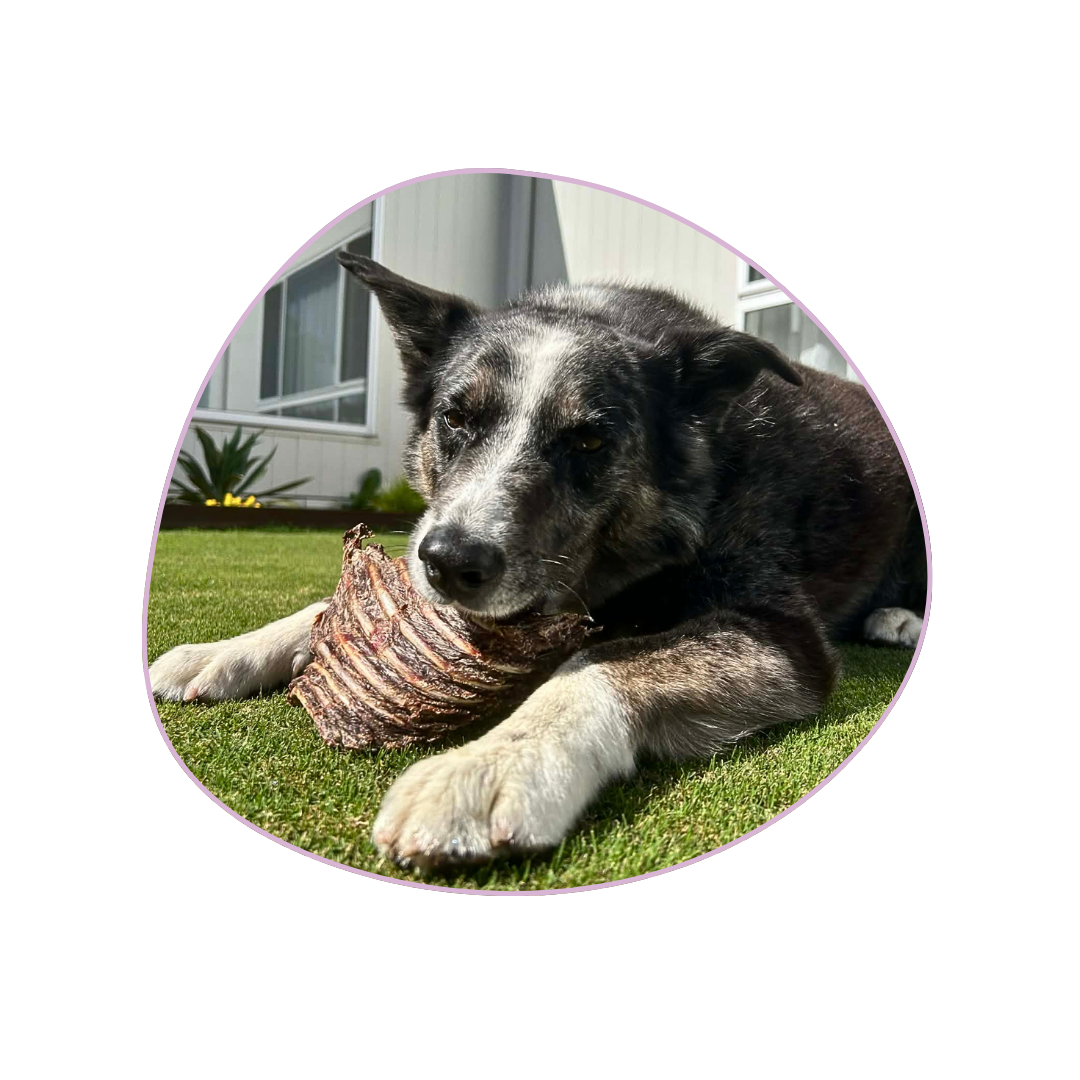

It's one of the most common questions dog owners ask, and it's a fair one.
The short answer: Air-dried bones and cooked bones are not the same thing, and the difference matters.
Cooked bones are processed at high temperatures, which changes the bone structure and makes them brittle. That's why they can splinter and should never be fed to dogs. Air-dried bones are a different story. They're dried slowly over several days at low heat. Ours are dried at 62°C as a bacteria kill step, then reduced to 40°C to gradually draw out moisture. This process preserves the integrity of the bone.
That said, any bone, raw or air-dried, carries some risk. The goal isn't to eliminate all risk; it's to be informed so you can make the right call for your dog.
How Much Should Dogs Chew for Good Dental Health?
For good oral health, dogs need to chew for at least 20 minutes a day. Regular chewing helps reduce plaque and bacteria build-up, which means healthier gums, fresher breath, and fewer vet visits.
Weight-Bearing vs Non-Weight-Bearing Bones for Dogs
One of the most important distinctions is weight-bearing vs. non-weight-bearing bones.
Weight-bearing bones, like the femur and tibia, are extremely dense. They can cause tooth fractures and aren't something I'd recommend. Non-weight-bearing bones like ribs, necks, tails, and feet are softer and a much safer option for a natural dental chew rotation.
Kangaroo Ribs for Dogs: A Natural Dental Chew That Lasts
Kangaroo ribs are one of our most popular chews, and one I personally use with my own French bulldogs.
They're a longer-lasting chew, which means your dog is getting that 20-minute chew window without you having to do much. I give them to my dogs a couple of times a week rather than daily, because kangaroo is a rich protein and these do have a higher bone content.
They're also a great option for dogs on an elimination diet or with food sensitivities; kangaroo is a novel protein for most dogs.
How to Choose the Right Size Bone Chew for Your Dog
The general rule: choose something bigger than your dog's head. If they can fit it in their mouth whole, it's a choking risk.
Always supervise your dog with any chew, but don't hover over them. If your dog feels like the chew might be taken away, especially if there are other animals nearby, they'll try to rush it, and that's when accidents happen. Let them settle, give them space, and watch from a distance.
Other Ways to Reduce Plaque in Dogs
Chewing is a great start, but you can layer in additional support. Supplements containing Ascophyllum nodosum (a specific type of seaweed) have been shown to reduce plaque when added to your dog's food daily. Shy Tiger makes a good one; easy to sprinkle over meals and formulated specifically for dogs.
Less plaque and bacteria in the mouth means healthier teeth, healthier gums, and fewer dental vet bills.
Leave a comment
Comments will be approved before showing up.
as seen in