
Your Dog Was Built to Eat the Whole Animal. Here's the Science to Prove It.
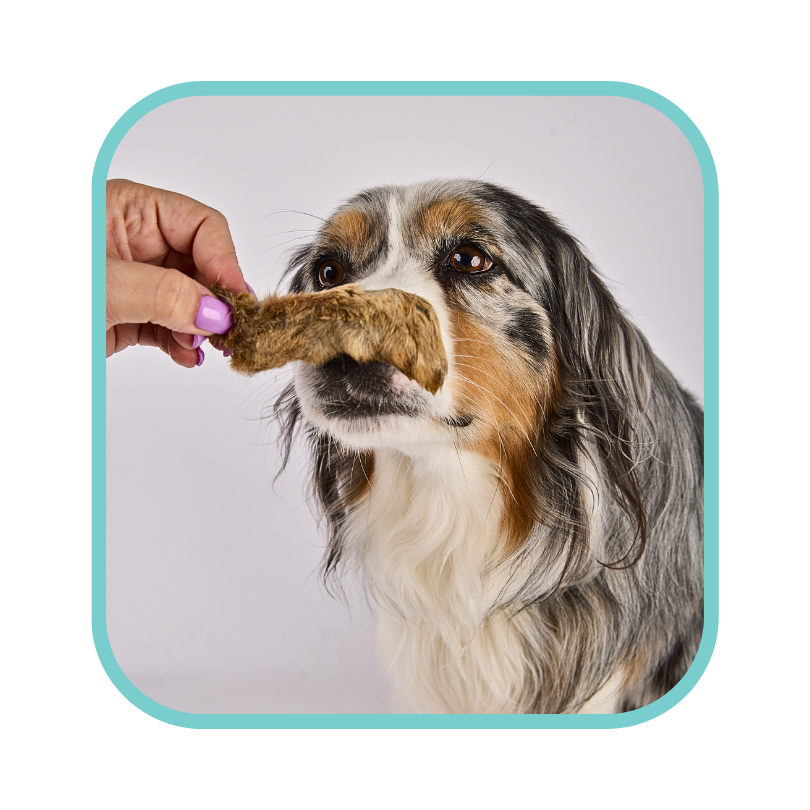

Kangaroo ears with fur. Venison legs with fur. Yes, really. No, you don't need to be weird about it.
Let's be honest. The first time you see a treat with fur still on it, your brain does a little thing. A recoil. A "what am I holding." Maybe a quiet question about your life choices.
We get it. We are humans. We have evolved past eating things with their coats still on (mostly).
But here's the thing: your dog hasn't. And that's not a flaw. It's actually the whole point.
Furry treats like kangaroo ears with fur and venison legs with fur aren't a gimmick or a quirky niche product for people who go a bit too hard on the raw feeding forums. They're one of the most biologically sensible things you can put in your dog's bowl. There's legitimate science behind it, a clear mechanism of action, and a whole list of health benefits that a lot of dogs (especially kibble-fed dogs) are seriously missing out on.
So let's talk about it. Because your dog deserves better than the ick factor stopping them from something genuinely good.
First, a Quick History Lesson Your Dog Already Knows
Before processed pet food existed, before the bag, the biscuit, the "complete and balanced" marketing speak, dogs ate prey. Whole prey. Not just the muscle meat stripped clean and extruded into a pellet. The bones. The organs. The skin.
The fur.
This is what's called a species-appropriate diet, and it's the foundation of raw and whole prey feeding philosophies like BARF (Biologically Appropriate Raw Food) and PMR (Prey Model Raw). The core idea is simple: dogs' digestive systems evolved over thousands of years to process whole animals, and the further we move from that, the more gaps appear in their nutrition and gut health.
In the wild, a dog or its ancestors didn't leave the coat behind. It was part of the meal. And it turns out, that fur wasn't just accidental roughage. It was doing something.
What Actually Happens When Your Dog Eats Fur
Here's where it gets interesting.
Fur is made of keratin, the same structural protein found in nails, hooves, and the outer layer of skin. It is not digestible. Your dog's stomach acid can't break it down. And that's the entire point.
Because fur is an insoluble fibre. It passes through the digestive system largely intact, and as it moves through the gut, it does something that no supplement, kibble additive, or fancy probiotic powder can replicate quite as elegantly: it physically moves through the intestinal tract like a slow, natural brush.
Think of it as a pipe cleaner for the gut. It collects residual waste, moves things along, and exits, taking some of the build-up with it. No chemicals. No processing. Just the mechanics of insoluble fibre doing exactly what insoluble fibre is supposed to do.
This isn't fringe wellness talk. Insoluble fibre performing this function in the canine digestive system is well-documented in veterinary nutrition. What makes fur interesting is that it provides this fibre in a completely animal-based, species-appropriate form: the way dogs were designed to get it, not from plant-based additives.
Prey Model Raw feeding guidelines actually recommend including 2 to 5% by weight of fur or feathered ingredients in daily meals specifically to provide this animal-based insoluble fibre and support colon health.
Let's Talk About Anal Glands (Sorry, But We Have To)
If you're a dog owner, you've either dealt with anal gland problems or you've been very lucky. Scooting. The smell. The vet visit. The manual expression that nobody (human or dog) particularly enjoys.
Anal gland problems are one of the most common reasons dogs visit the vet, and diet is one of the most significant factors driving them. Here's the mechanism:
The anal glands are small sacs on either side of your dog's anus that express naturally when a dog passes a firm, bulky stool. The pressure from a well-formed poo is what does the job. When dogs eat highly processed, low-fibre diets, their stools are often too soft to create that pressure, and the glands don't express. They build up. They impact. They become a problem.
Insoluble fibre is the solution, and the research backs this clearly. Fibre bulks up stool and improves consistency, and when stool consistency is appropriate, the pressure from normal bowel movements naturally expresses the anal glands during defecation. This is well-established in veterinary medicine. It's why high-fibre diets are a standard first-line recommendation for dogs with recurring anal gland issues.
Fur, as an animal-based insoluble fibre, contributes to exactly this outcome. More bulk. Firmer stools. Natural gland expression. Fewer emergency vet visits and awkward Googling at 11pm.
It's not a cure for dogs with severe or chronic anal gland disease. That needs a vet. But as part of a diet that supports good stool consistency, fur is doing real, functional work.
The Gut Health Angle (Because It's Always the Gut, Isn't It)
We've all heard that the gut is the body's second brain. Turns out that's as true for dogs as it is for us.
Around 80% of a dog's immune system lives in the gut. When the digestive system is working well, when the microbiome is balanced, transit time is regular, and the intestinal tract isn't sluggish and full of residual build-up, the whole immune system runs better.
Fur treats support this in a pretty direct way. Regular consumption of insoluble fibre:
- Keeps transit time healthy. Waste moves through efficiently rather than sitting around.
- Bulks and firms stools. Solid, consistent poos are a reliable sign that the gut is working as it should.
- Provides a small prebiotic benefit. Supporting the environment in which beneficial gut bacteria thrive.
- Helps clear the intestinal tract of residual material that accumulates over time.
If your dog is on an exclusively processed diet, chances are they're getting very little in the way of genuine insoluble fibre, let alone animal-based insoluble fibre. Adding furry treats a few times a week is a low-effort, high-impact way to fill that gap.
What About Parasites?
This one comes up a lot in the natural feeding community, so let's be straight with you.
The claim: fur sweeping through the intestinal tract can act as a physical mechanism that helps move parasites (like intestinal worms and their larvae) through the gut rather than allowing them to linger and establish.
The evidence: this is plausible based on the mechanics of insoluble fibre and intestinal motility. It's discussed by vets operating in the integrative and holistic nutrition space, and the logic is sound. A healthy, well-moving gut is simply a harder environment for parasites to thrive in.
However: fur is not a dewormer. It does not kill parasites. It should not replace your regular veterinary worming schedule. If you suspect your dog has worms, see your vet.
Think of it this way: fur supports a healthy gut environment. A healthy gut is a less hospitable place for parasites. That's a meaningful benefit, just not a standalone treatment.
The Dental Bonus
Less headline-grabbing than the gut stuff, but worth mentioning: furry treats are also doing a bit of work for your dog's teeth.
The abrasive texture of fur against teeth and gums creates a natural scrubbing action as your dog chews. It's not replacing a toothbrush, but it's closer to how dogs' teeth were meant to be maintained (through the act of chewing fibrous, textured material) than anything that comes out of a crinkly bag.
Nothing Wasted. Everything Used.
There's another reason we love furry treats beyond the health benefits, and it's this: they represent the whole animal philosophy done properly.
When an animal is raised and processed for food, whether that's cattle, deer, or any other species, leaving the hide behind is waste. Furry treats like cow ears with fur and deer legs with fur are a product of using the whole animal. Every part. Which is not only more sustainable, it's more honest.
We're a brand that's vocal about single-ingredient transparency and provenance. This is that philosophy made literal. You know exactly what you're looking at. You know where it came from. There's nothing to hide, because there's nothing in it except the animal itself.
A Word on the Whole Prey Research
For the science-minded among you: a 2018 peer-reviewed study published in PLOS ONE by researchers from Ghent University's Faculty of Veterinary Medicine, the University of Zurich, Wageningen University, and Utrecht University examined how feeding whole prey (specifically day-old chicks) affected the digestive physiology of dogs compared to processed diets. The study found that feeding whole prey produced distinct changes in faecal consistency patterns not observed with processed food, suggesting that the canine digestive tract may have a separation mechanism specifically adapted for processing whole prey, including fur, feathers, and bone.
In other words: your dog's gut might actually be designed to handle this differently to processed food. Not as a quirk. As a feature.
So, How Often Should You Feed Furry Treats?
A few times a week is the sweet spot for most dogs. You don't need to go daily, especially when you're introducing them for the first time. Let the digestive system adjust. Start with one treat per session, supervise your dog while they chew (especially if they're a gulper), and make sure they have access to fresh water.
You might notice firmer, bulkier stools pretty quickly. That's the fibre doing its thing. You might also notice your dog going absolutely feral for these treats in a way they don't for their usual snacks. That's also the whole prey thing doing its thing.
What We've Got for You
Our kangaroo ears with fur and venison legs with fur are both made from 100% Australian animals, single ingredient, air-dried. No additives. No preservatives. Nothing you'd need a chemistry degree to pronounce.
Just the whole animal, as nature intended it.
Your dog was built for this. And honestly? Once you get past the initial weirdness of a furry ear sitting in your treat jar, you'll be glad you made the switch.
Shop the Full Furry Treats Range Here
Always consult your vet before making significant changes to your dog's diet, particularly if your dog has existing health conditions, digestive sensitivities, or recurring anal gland issues. Furry treats are a dietary supplement and gut-health support tool, not a substitute for veterinary care.
Leave a comment
Comments will be approved before showing up.
as seen in